Top 10 Valence Security Competitors and Alternatives
Valence Security has carved out a niche in the SaaS Security Posture Management (SSPM) space by focusing on SaaS-to-SaaS integrations and third-party app connections. But as organizations evaluate their options, many are discovering that Valence's strengths come with significant trade-offs, particularly around data protection, pricing transparency, and coverage breadth.
Whether you're evaluating Valence for the first time or looking to replace it with a more comprehensive solution, this guide breaks down the top alternatives and what each actually delivers.
Why Organizations Are Exploring Valence Security Alternatives
Before diving into competitors, it's important to understand where Valence falls short for many teams:
Data security isn't the focus.
Industry analysts consistently note that while Valence excels at configuration and identity visibility, data access governance and DLP aren't primary capabilities. Organizations whose top priority is preventing sensitive data exposure often find Valence lacking the granular, content-aware controls they need.
Enterprise pricing creates barriers.
According to Vendr transaction data, Valence's average annual cost is approximately $78,000, with contracts ranging up to $101,000. This enterprise-only pricing model, with no published tiers, makes it inaccessible for mid-market organizations and difficult to budget for anyone.
Limited coverage for niche applications.
Gartner Peer Insights reviewers note that Valence "works with major vendors like Google Workspace, Microsoft 365, Slack" but has "limited coverage for niche or custom SaaS applications." Organizations with diverse SaaS stacks find themselves with persistent blind spots.
Small market presence.
With only 3.7% mindshare in the SSPM category according to PeerSpot, Valence remains a smaller player in a competitive market. This raises questions about long-term viability and innovation pace compared to larger, better-funded competitors.
Integration-focused, not security-complete.
Valence's strength in SaaS-to-SaaS integration monitoring doesn't translate to comprehensive security posture management. Teams still need additional tools to address the full spectrum of SaaS risks.
What Matters When Choosing a Valence Alternative
When evaluating SSPM platforms, prioritize:
Complete coverage - Shadow SaaS, shadow AI, identities, configurations, and data access
Automated remediation - Fixes problems, not just surfaces them
Transparent pricing - Know costs before committing to sales conversations
Fast time-to-value - Minutes to visibility, not weeks of implementation
Operational efficiency - Maintain security without dedicated staff
Top Valence Security Alternatives for 2026
1. Perimeters
Best for: Complete SaaS security with transparent pricing and immediate results
Perimeters delivers what security teams actually need: comprehensive SaaS visibility, automated remediation, and transparent pricing, all without the enterprise sales cycle that Valence requires.
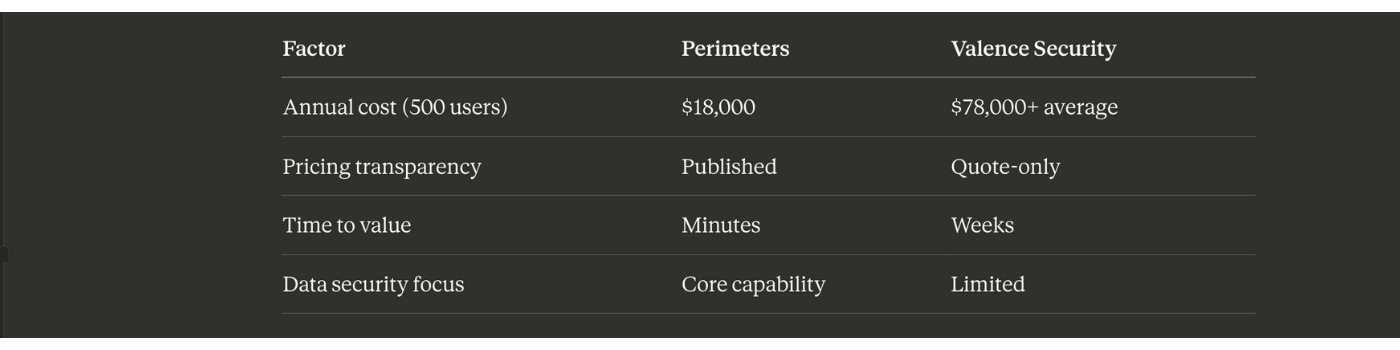
While Valence focuses narrowly on SaaS-to-SaaS integrations and charges $78,000+ annually for the privilege, Perimeters provides full-spectrum SSPM capabilities at $3 per user per month. The difference isn't just price. It's philosophy. Perimeters believes security tools should be accessible, fast to deploy, and automated by default.
Key advantages over Valence:
Instant, comprehensive discovery - Full visibility into your SaaS environment within minutes, including shadow apps, shadow AI, identities, and misconfigurations that Valence's narrower scope misses
True automated remediation - Resolve hundreds of issues with bulk actions and automated workflows, not just the "flexible remediation options" Valence advertises that still require significant manual effort
Context-based severity ranking - Hundreds of security parameters continuously checked with findings prioritized by actual business impact
Complete identity governance - Detect partial offboarding, over-privileged accounts, inactive users, and risky access patterns across your entire SaaS estate
Shadow AI discovery - Comprehensive GenAI app governance that goes beyond Valence's emerging capabilities
The cost comparison speaks for itself:
What customers say:
"Perimeters gives us a central point of control, providing clear findings and remediation tools to save time and reduce confusion."
"With Perimeters I can spend a few minutes at a time taking care of well-defined issues with all the information in one place."
Pricing: $3 per active user per month. Straightforward, predictable, and roughly 75% less than Valence.
Best suited for: Organizations of any size seeking comprehensive SSPM without enterprise pricing, lengthy implementations, or gaps in data security coverage.
Best for: Organizations with specific DLP requirements for collaboration tools
DoControl emphasizes data loss prevention and access governance, particularly for collaboration applications like Google Workspace, Slack, and Microsoft 365.
What it offers:
Data access governance with content classification
Automated access control workflows
Insider threat detection capabilities
Third-party OAuth monitoring
Where it falls short:
Collaboration-centric scope - Strong for file sharing and messaging platforms, but limited visibility into broader SaaS categories like HR, finance, or DevOps tools
Enterprise pricing opacity - Like Valence, requires sales engagement with no published pricing, creating budget uncertainty
Alert volume challenges - Extensive monitoring can generate alert fatigue for teams without dedicated security staff
Not a complete SSPM - Primarily a DLP tool that has expanded into adjacent areas; configuration management remains secondary
DoControl addresses a specific use case well but requires supplementation for comprehensive SaaS security.
3. AppOmni
Best for: Salesforce-dominated enterprises with deep pockets
AppOmni built its reputation on deep Salesforce integration and has expanded to cover other major enterprise applications like ServiceNow and Microsoft 365.
What it offers:
Deep configuration monitoring for supported platforms
Compliance alignment with industry frameworks
Data exposure analysis for core applications
Integration with security orchestration tools
Where it falls short:
Narrow application focus - Exceptional for Salesforce, adequate for a handful of others, minimal for the long tail of SaaS applications most organizations use
AWS Marketplace pricing reveals costs - $7,500 per year for just 100 users on a single SaaS app; enterprise-wide coverage becomes extremely expensive
Visibility without action - Strong at identifying problems but remediation capabilities lag purpose-built solutions
Implementation complexity - Professional services often required for full deployment, extending time-to-value
Enterprise-only positioning - Mid-market organizations find themselves priced out or underserved
Organizations centered entirely on Salesforce may find value; everyone else should look elsewhere.
4. Obsidian Security
Best for: Security operations teams with investigation resources
Obsidian differentiates by combining SSPM with User and Entity Behavior Analytics, positioning itself as a threat detection and investigation platform for SaaS environments.
What it offers:
User behavior analytics across SaaS platforms
Account compromise and insider threat detection
Investigation and forensics capabilities
Integration with security operations workflows
Where it falls short:
Detection over prevention - Excels at finding threats after they occur; less effective at hardening posture proactively
Requires security expertise - Designed for mature security operations centers with dedicated investigation staff
Limited automation - Investigation-focused approach means manual effort remains high
Complex pricing structure - Enterprise contracts with variable costs based on data volume create unpredictable expenses
Narrow use case - Organizations focused on compliance, configuration hygiene, or lean security teams find limited value
Obsidian works as a SOC tool for large enterprises, not as a primary SSPM for most organizations.
5. Wing Security
Best for: Organizations wanting to dip a toe into SSPM
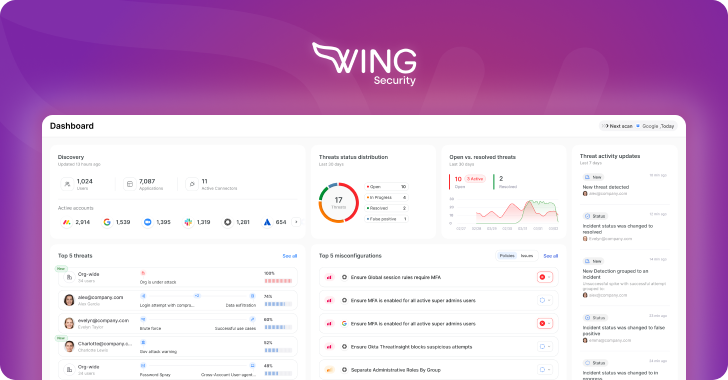
Wing Security offers a freemium model providing basic SaaS inventory at no cost, with paid tiers adding security controls.
Enterprise pricing only - No published tiers; custom quotes create negotiation asymmetry
Six-hour support response - Compared to competitors offering two-hour or faster response times
Organizations already invested in CrowdStrike may find value in consolidation; others should evaluate purpose-built alternatives.
7. Netskope SSPM
Best for: Organizations committed to Netskope's security platform
Netskope includes SSPM as part of its Security Service Edge (SSE) offering, providing SaaS configuration monitoring alongside CASB and zero-trust capabilities.
Limited depth per application - Breadth of discovery comes at the cost of deep configuration analysis
Newer market entrant - Less proven track record than established competitors
Standalone value questions - Often deployed alongside other security tools, raising total cost of ownership
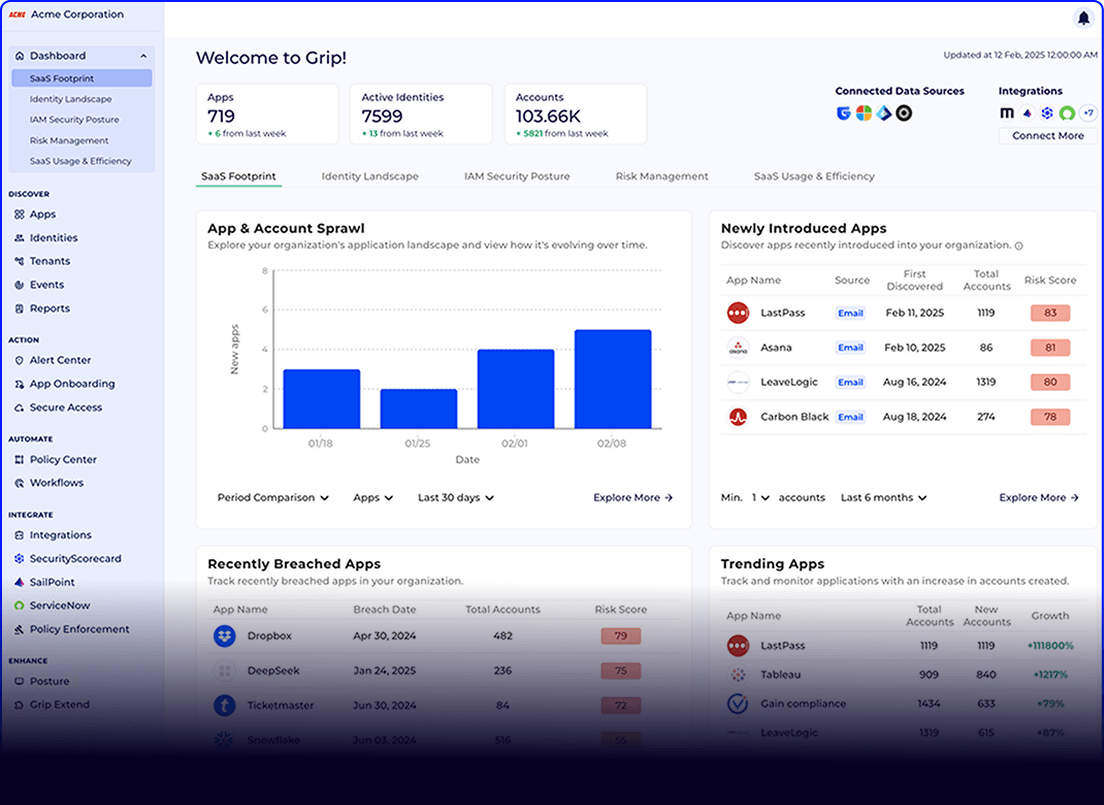
Grip helps organizations understand their SaaS footprint but provides limited value beyond initial discovery.
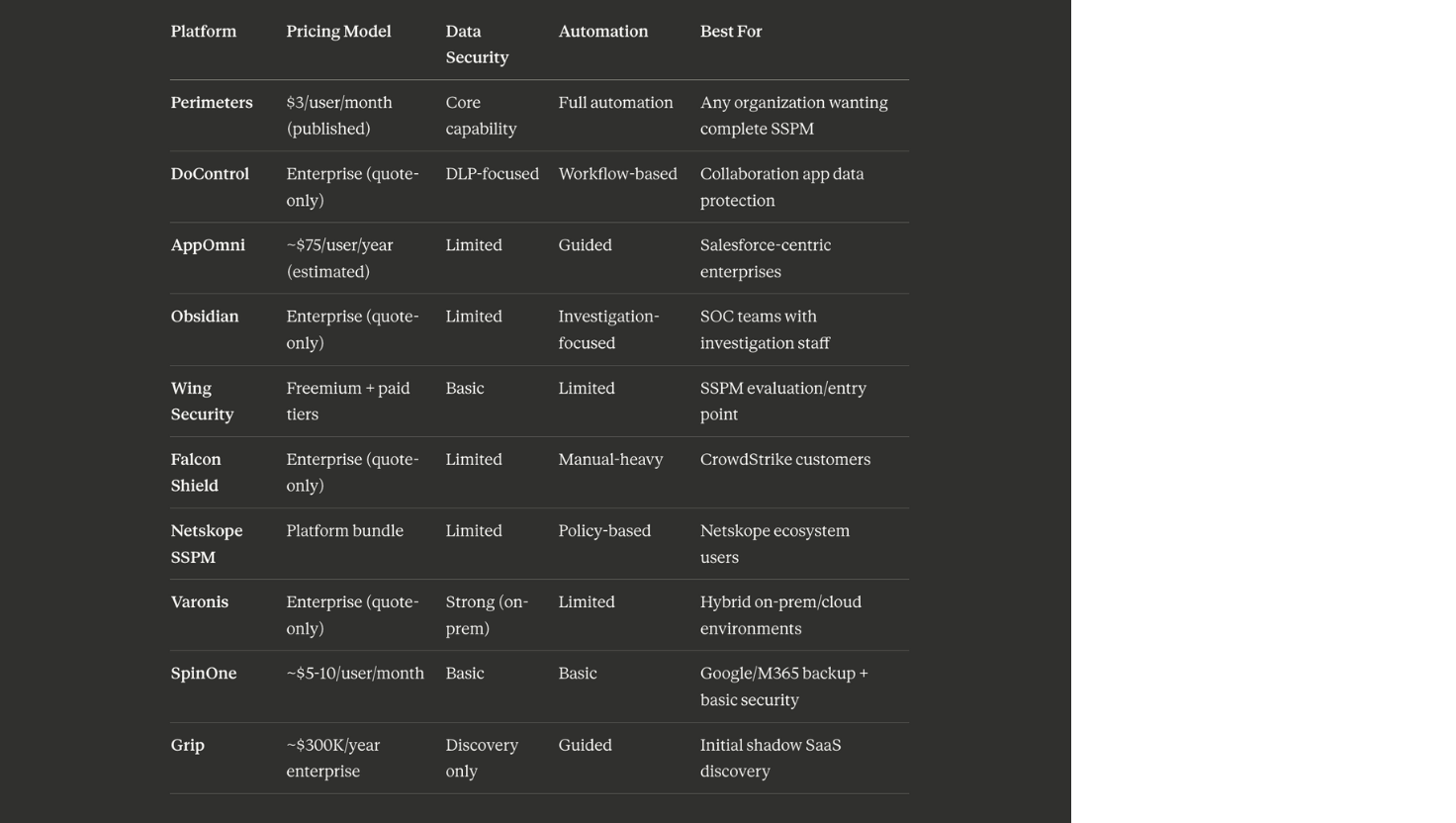
Valence Security Alternatives Side-by-Side
Making the Right Choice
The SSPM market has fragmented into specialized niches, each vendor optimizing for different use cases. When evaluating Valence alternatives:
For comprehensive, accessible SSPM: Perimeters delivers complete visibility, automated remediation, and transparent pricing at a fraction of Valence's cost. Organizations that want to secure their entire SaaS estate, not just integrations, without enterprise complexity should start here.
For specific use cases: DoControl suits collaboration-focused DLP, Obsidian suits investigation-heavy SOC teams, and platform-bundled options (Netskope, Falcon Shield) suit organizations already committed to those ecosystems.
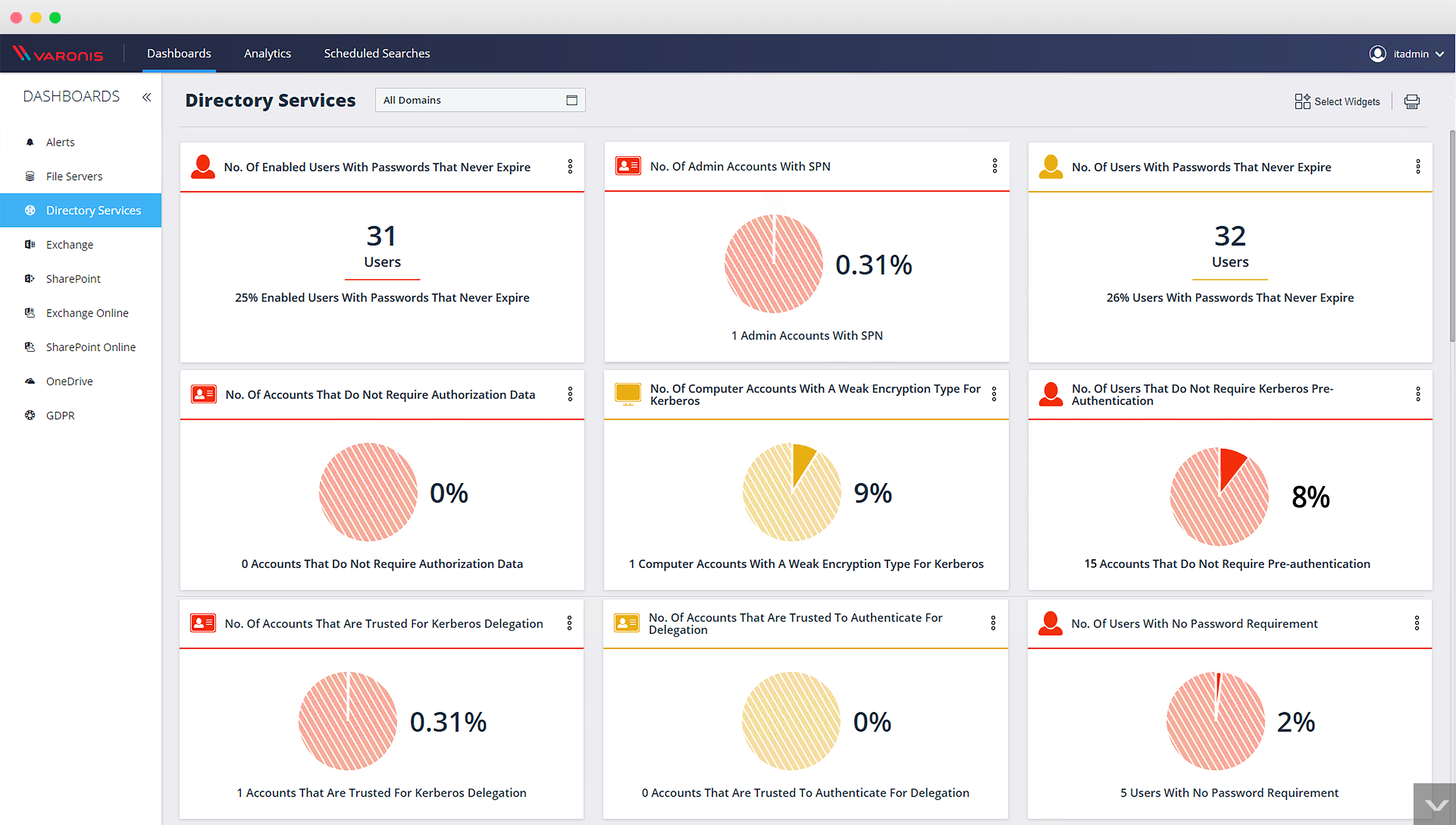
For enterprises with unlimited budgets: AppOmni or Varonis may provide depth in narrow areas, but expect six-figure annual costs and lengthy implementations.
The reality is that most organizations don't need Valence's $78,000 average contract to secure their SaaS environment. They need a tool that delivers comprehensive visibility, fixes problems automatically, and doesn't require a procurement committee to approve.
Take Control of Your SaaS Security Without The Hefty Price
Ready to see what comprehensive SSPM looks like without enterprise pricing?