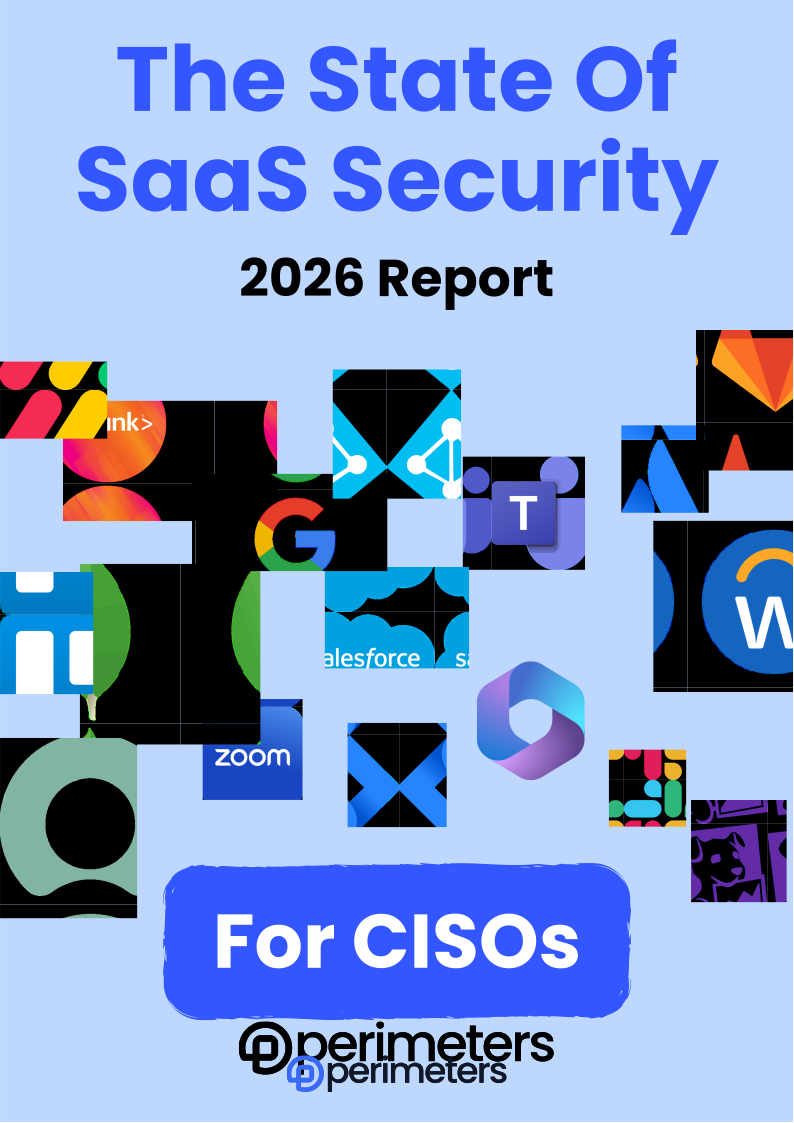
2026 State of SaaS Security Report

It’s getting spooky in the SaaS world...

SaaS adoption is at an all-time high. But visibility isn’t.

Our State of SaaS Security 2026 report exposes the real risks hiding inside everyday apps so you can get ready for what’s coming in 2026.

This year’s findings make one thing clear: the SaaS layer has become the fastest-growing attack surface in the enterprise, and most organizations are flying blind.

Threats are evolving faster than policies, and attackers are shifting their focus to the overlooked corners of identity, configuration, and permissions.

Our report breaks down the trends shaping the year, the blind spots most teams miss, and the actions that actually move the needle.

If SaaS powers your business, this is the signal you can’t afford to ignore.

Get The Full Report

Thank you! You will be redirected to the full report.
Oops! Something went wrong while submitting the form.

Highlights From Our Report

Identity threats are on the rise

SaaS environments now hold more identities than devices, networks, or on-prem systems ever did.

Users, contractors, service accounts, OAuth connections, and API keys pile up faster than security teams can track them.

Attackers know this and target the gaps - dormant accounts, nonhuman identities, partially off-boarded employees, and more.

Identity is the new perimeter, and most organizations are only seeing a fraction of it.
>70%
of orgs admit employees had inappropriate or leftover access to data
>60%
of end-user accounts have MFA either disabled or inactive

MFA is still the easiest win. And the most ignored.

MFA adoption remains inconsistent across SaaS platforms, even though unprotected logins account for nearly all account-takeover incidents.

Many organizations rely on partial enforcement, legacy authentication flows, or “optional” MFA that goes unused.

The result: attackers walk through the front door with stolen or guessed credentials.

Universal, non-negotiable MFA is still the fastest way to shut down the majority of SaaS compromises.

Shadow AI lurking in the dark

Employees are rapidly adopting AI tools to boost productivity, often without clear oversight or approval.

These tools connect to sensitive data, interact with SaaS applications, and operate with permissions that may go unmonitored.

Establishing visibility and governance over AI usage is now a key element of protecting data integrity and maintaining compliance.
>56%
surge in AI-related SaaS security incidents year-over-year since 2024

Want to see the rest?

Get insights into everything you need to know when it comes to SaaS security going into 2026.

Download it here for free - with a little surprise on the inside.