Top 10 Best Lumos Competitors & Alternatives in 2026
Lumos has gained traction as an identity governance and SaaS management platform, combining access reviews, lifecycle automation, and software spend optimization into a single interface. But as organizations evaluate their options, many discover that Lumos's focused approach comes with trade-offs around pricing transparency, security depth, and operational flexibility.
Whether you're evaluating Lumos for the first time or looking for a platform that better fits your specific needs, this guide breaks down the top alternatives and what each actually delivers.
Why Organizations Are Exploring Lumos Alternatives
Before diving into competitors, it's important to understand where Lumos falls short for many teams:
Custom pricing creates budget uncertainty. Lumos follows a quote-based pricing model with no published tiers. According to reviews, this lack of transparency makes it difficult to budget accurately and creates negotiation asymmetry. Organizations report needing executive involvement just to get reasonable pricing, with some noting they had to "stand firm on budget expectations" to reach acceptable terms.
Security posture management isn't the focus. While Lumos excels at identity governance and access reviews, it wasn't built as a security-first platform. Organizations whose primary concern is SaaS security posture, misconfiguration detection, or data protection often find they need additional tools to address these gaps.
Complexity increases as requirements evolve. Gartner Peer Insights reviewers note that while Lumos works well for straightforward access rules, "the real limitations center around more complex access rules." Organizations with nuanced permission structures find themselves building extensive workarounds.
Learning curve requires investment. Multiple reviews highlight that fully leveraging Lumos's automation capabilities takes significant time. Teams without dedicated resources to configure and optimize the platform may not realize its full value.
Limited customization options. Users consistently mention that customization is constrained, with one Gartner reviewer noting "occasional performance lags and limited customization may impact satisfaction and efficiency."
What Matters When Choosing a Lumos Alternative
When evaluating identity governance and SaaS management platforms, prioritize:
Transparent pricing - Know costs before committing to sales conversations
Security depth - Misconfigurations, data access, and compliance coverage
Fast time-to-value - Minutes to visibility, not weeks of implementation
Automated remediation - Fixes problems, not just surfaces them
Operational efficiency - Maintain security without dedicated staff
Top Lumos Alternatives for 2026
1. Perimeters
Best for: Complete SaaS security with transparent pricing and immediate results
Perimeters takes a different approach than Lumos by focusing on security outcomes rather than governance processes. While Lumos emphasizes identity lifecycle management and access reviews, Perimeters delivers comprehensive SaaS security posture management with transparent pricing and automation that actually fixes problems.
The fundamental difference is philosophy. Lumos requires you to build complex workflows and invest time configuring the platform. Perimeters works out of the box, providing immediate visibility and automated remediation without lengthy implementation cycles.
Key advantages over Lumos:
Security-first design - While Lumos focuses on access governance, Perimeters addresses the full spectrum of SaaS security: misconfigurations, data exposure, shadow apps, shadow AI, and identity risks
Published, predictable pricing - $3 per user per month with no sales calls required, compared to Lumos's opaque custom pricing model
Instant time-to-value - Full visibility in minutes, not the weeks of configuration Lumos requires
True automated remediation - Bulk actions and automated workflows that resolve issues, not just highlight them for manual intervention
Minimal operational overhead - 30 minutes per week to maintain security posture, compared to the ongoing configuration and review cycles Lumos demands
What customers say:
"Perimeters gives us a central point of control, providing clear findings and remediation tools to save time and reduce confusion."
"With Perimeters I can spend a few minutes at a time taking care of well-defined issues with all the information in one place."
Pricing: $3 per active user per month. Straightforward, predictable, and as budget-friendly as it gets.
Best suited for: Organizations that prioritize SaaS security outcomes over governance process, want transparent pricing, and need results without dedicating resources to platform configuration.
Best for: IT teams focused on SaaS spend optimization
Torii is a SaaS management platform that emphasizes discovery, spend tracking, and workflow automation. It competes with Lumos primarily in the SaaS visibility and cost optimization space rather than deep identity governance.
What it offers:
Shadow IT discovery through browser extensions and finance data analysis
Workflow automation tied to lifecycle events
120+ integrations across HRIS, ITSM, SSO, and collaboration tools
Department-level spend reports and renewal tracking
Application ownership assignment
Where it falls short:
IGA as an add-on, not core - Torii splits its platform into separate IGA and SMP packages; identity governance feels bolted on rather than foundational
Limited security capabilities - Discovery and spend focus means configuration monitoring, risk detection, and remediation take a back seat
Custom pricing complexity - Like Lumos, Torii uses custom pricing based on organization size, creating budget uncertainty
Integration depth varies - While the connector count is high, depth of integration with each application differs significantly
Primarily IT-focused - Security teams often find the platform lacks the depth they need for compliance and risk management
Torii works well for IT operations teams focused primarily on SaaS spend, but organizations needing security-first governance should look elsewhere.
3. Zluri
Best for: Organizations wanting discovery breadth over governance depth
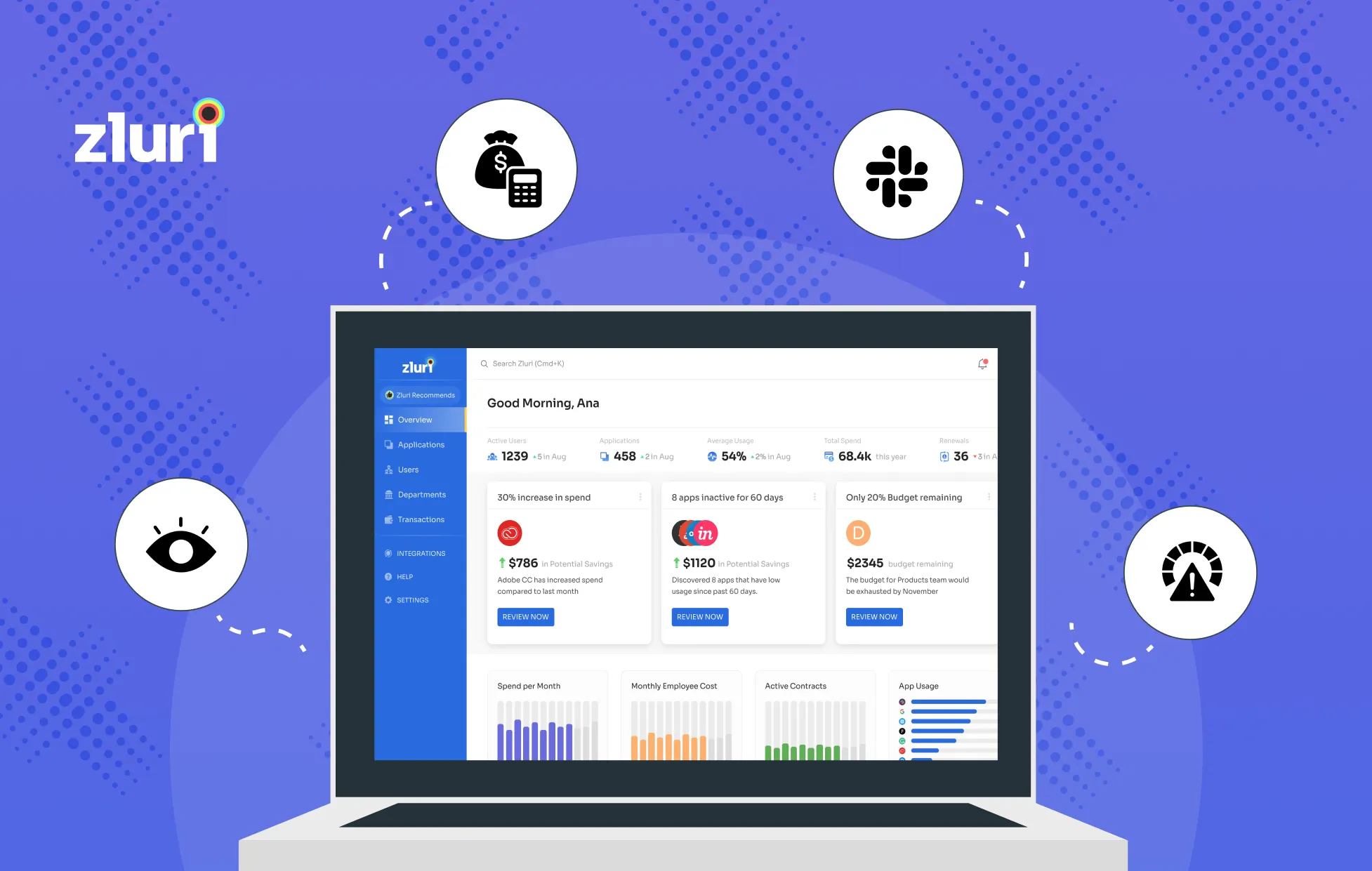
Zluri built its reputation on comprehensive SaaS discovery, claiming visibility into 225,000+ applications through multiple detection methods. The platform combines SaaS management with identity governance capabilities.
What it offers:
Patented multi-method discovery engine with nine detection approaches
Self-service access requests through Slack
Instant lifecycle automation with sub-hour processing
Integration with 800+ SaaS applications
Usage tracking and spend analytics
Where it falls short:
Complexity over clarity - Zluri's attempt to cover SaaS discovery, spend management, procurement, and governance results in a complex interface and steep learning curve
Quote-based pricing - No published pricing; costs depend on employee count, applications, and modules selected
Governance depth sacrificed for breadth - Discovery of 225,000+ apps is impressive, but configuration monitoring and security analysis within those apps remains shallow
Review feedback indicates maturity gaps - Users report the platform is still evolving, with features that need refinement
Enterprise-oriented complexity - Smaller organizations often find the platform over-engineered for their needs
Zluri serves organizations that prioritize knowing what apps exist over securing how those apps are configured.
4. BetterCloud
Best for: Security teams in Google Workspace and Microsoft 365 environments
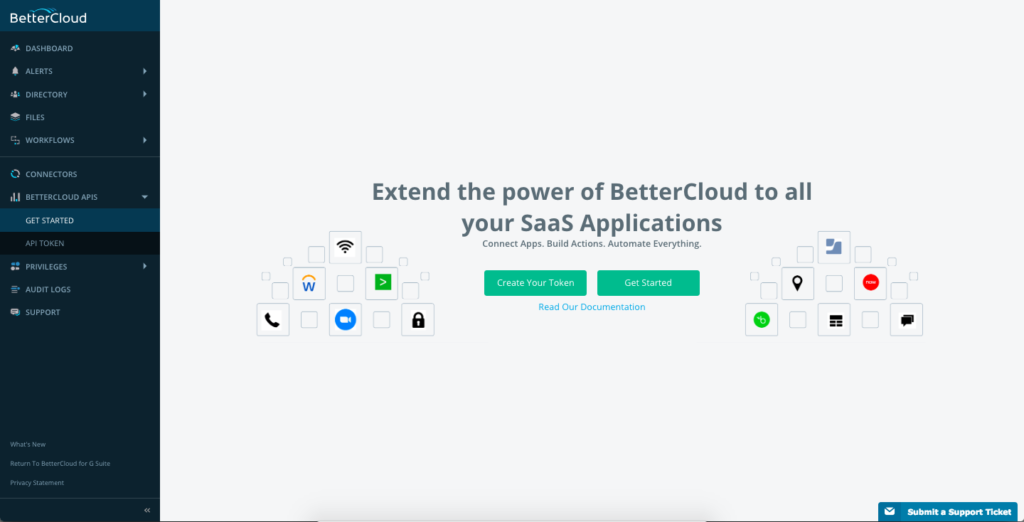
BetterCloud positions itself as a SaaS operations platform with strong security automation, particularly for core productivity suites. It's been in the market longer than Lumos and has deeper feature maturity in its core use cases.
What it offers:
Deep integration with Google Workspace and Microsoft 365
Narrow platform focus - Exceptional for Google and Microsoft environments, but coverage drops significantly for the broader SaaS landscape
Pricing can escalate - Enterprise pricing with limited options may mean paying for features you don't need
Integration issues reported - Users note that some integrations require extra development or manual workarounds to function properly
Learning curve for advanced features - While basic functions are accessible, users mention that advanced automation takes time to master
Less innovation recently - As a more established player, some users report the platform feels less agile than newer competitors
BetterCloud works well for organizations centered on Google or Microsoft productivity tools but provides limited value for diverse SaaS portfolios.
5. Okta Identity Governance
Best for: Organizations already invested in the Okta ecosystem
Okta extended its identity provider platform with governance features, offering access certifications, entitlement management, and lifecycle automation. For organizations already using Okta for SSO and authentication, it provides a natural extension.
What it offers:
Access certifications with contextual intelligence
Lifecycle workflows triggered by HR and directory changes
Integration with Okta's broader identity platform
Pre-built connectors for common applications
Audit trails and compliance reporting
Where it falls short:
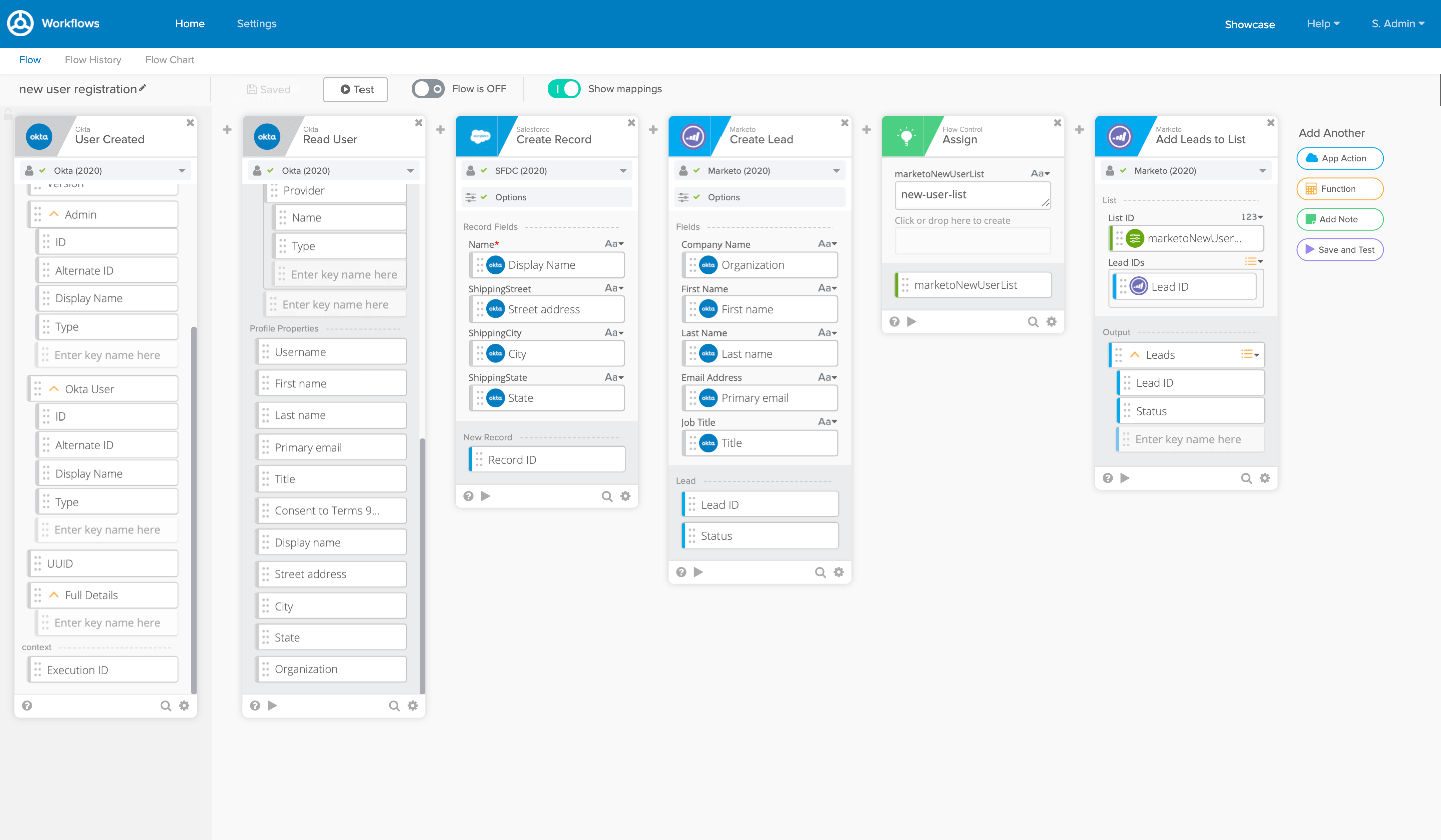
Platform lock-in pressure - Maximum value requires deep Okta investment; standalone buyers face constant upsell pressure
Governance as an add-on - IGA capabilities were added to an authentication platform, not built from the ground up
Pricing complexity - Multiple tiers and add-ons make understanding true costs difficult
Limited outside Okta - Organizations using other identity providers find value significantly diminished
SaaS management gaps - Spend optimization, shadow IT discovery, and license management aren't core strengths
Okta Identity Governance makes sense for organizations already committed to the Okta ecosystem; everyone else should evaluate purpose-built alternatives.
6. SailPoint Identity Security Cloud
Best for: Large enterprises with complex compliance requirements
SailPoint is an enterprise-grade IGA solution targeting organizations that need serious compliance frameworks, deep integrations, and governance across multiple countries and regulations.
What it offers:
Unified governance across human and non-human identities
Enterprise-scale integration library connecting to 99% of applications
Deep SAP integrations for manufacturing and enterprise environments
AI-powered access recommendations
Comprehensive audit and compliance capabilities
Where it falls short:
Enterprise complexity and cost - SailPoint is built for large organizations with dedicated identity teams; smaller companies find it overwhelming
Extended implementation timelines - Deployments often take months with significant professional services requirements
Steep learning curve - The platform's depth comes with complexity that requires specialized expertise
Overkill for SaaS-focused organizations - Heavy investment in on-premises and legacy system support may be irrelevant for cloud-native companies
Legacy architecture shows - While modernizing, SailPoint's roots in traditional IGA mean some workflows feel dated
SailPoint serves enterprises with complex, multi-country compliance requirements but overwhelms organizations seeking agile, modern governance.
7. Saviynt
Best for: Regulated industries requiring cloud-native enterprise IGA
Saviynt offers a cloud-native identity governance platform focusing on compliance, risk management, and privileged access across complex environments.
What it offers:
Cloud-native architecture built for scale
Identity governance and privileged access in one platform
Strong compliance mapping for regulations like SOX, HIPAA, and GDPR
Risk-based access decisions
Application access governance
Where it falls short:
Enterprise pricing without transparency - Custom quotes required; costs can be substantial for smaller organizations
Implementation complexity - Full deployment requires significant planning and professional services
Feature overload - Organizations with simpler requirements may find themselves paying for capabilities they don't need
Support variability - Reviews indicate support quality can be inconsistent depending on account size
Focused on governance, not SaaS management - Spend optimization and shadow IT detection aren't primary capabilities
Saviynt fits regulated enterprises needing comprehensive IGA but creates unnecessary complexity for organizations with straightforward requirements.
8. Microsoft Entra ID (formerly Azure AD)
Best for: Microsoft-centric organizations seeking integrated identity management
Microsoft Entra ID provides identity and access management deeply integrated with the Microsoft ecosystem, including conditional access, lifecycle workflows, and governance features.
What it offers:
Seamless integration with Microsoft 365, Teams, and Azure
Conditional access policies based on user, device, and risk
Multi-factor authentication built-in
Self-service capabilities for password reset and group management
Access reviews and governance workflows
Where it falls short:
Microsoft-centric by design - Deep integration with Microsoft products doesn't extend to the broader SaaS landscape
Governance features require premium tiers - Advanced capabilities like access reviews require Entra ID Governance licenses at additional cost
Limited SaaS visibility - Shadow IT discovery and spend management aren't core capabilities
Complexity for non-Microsoft apps - Configuring governance for applications outside the Microsoft ecosystem requires more effort
Enterprise licensing confusion - Understanding which features are included in which license bundle challenges many organizations
Entra ID works well for Microsoft-heavy environments but provides limited value for organizations with diverse SaaS portfolios.
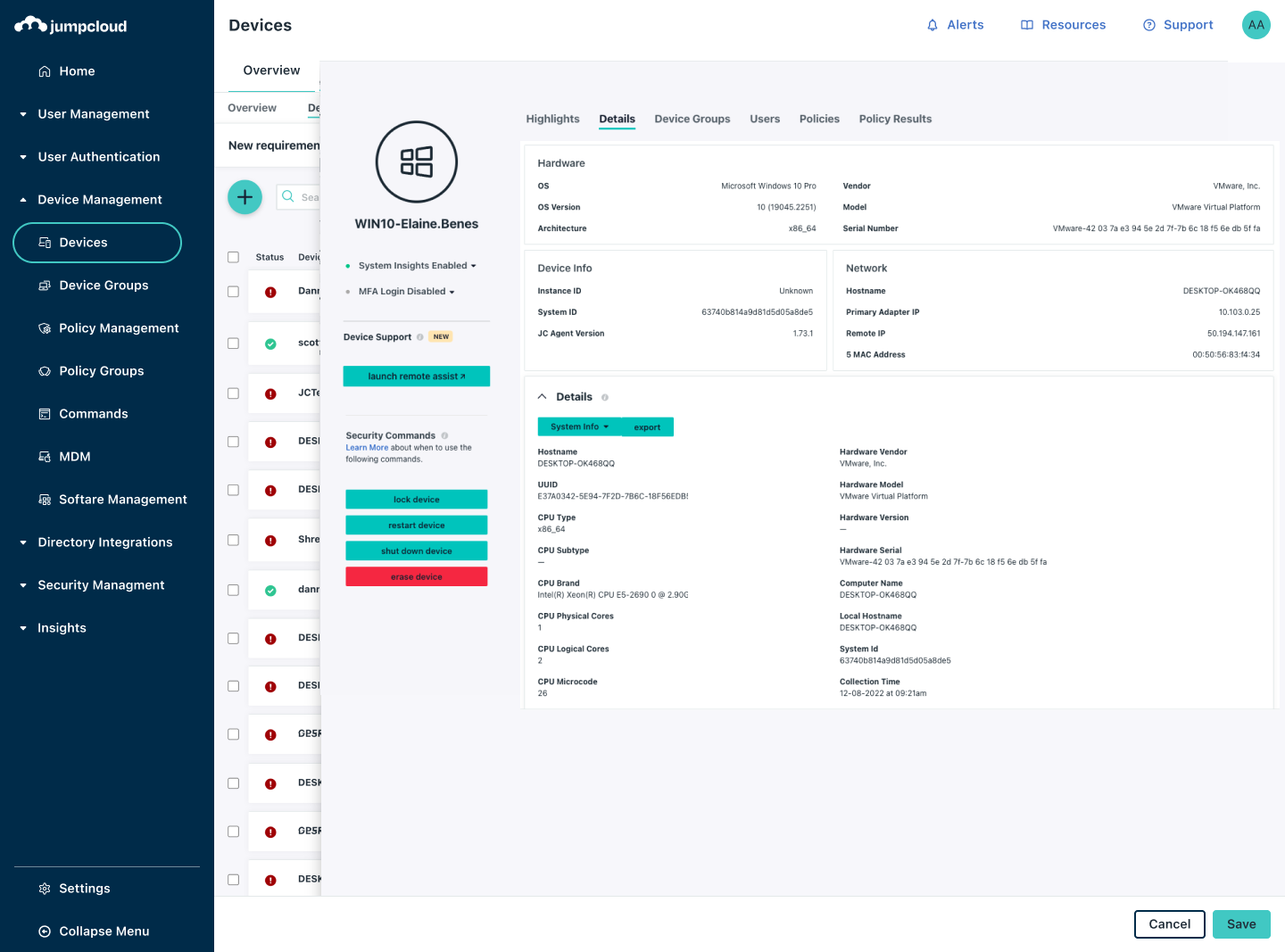
9. JumpCloud
Best for: SMBs seeking unified identity and device management
JumpCloud offers an open directory platform combining identity management with device management, targeting organizations that need both capabilities in a single solution.
What it offers:
Unified identity and device management
Cross-platform support for Windows, Mac, and Linux
SSO and MFA capabilities
LDAP and RADIUS support for legacy applications
SaaS management features
Where it falls short:
Breadth over depth - Covering identity, devices, and SaaS management means none receive the focus of specialized tools
SMB-oriented feature set - Larger organizations may find capabilities insufficient for complex requirements
SaaS governance is secondary - Identity and device management are primary; SaaS security and spend optimization are add-ons
Integration library still growing - While expanding, connector depth lags more established competitors
Pricing scales quickly - Per-user pricing across multiple capabilities can add up for larger organizations
JumpCloud suits smaller organizations wanting identity and device management together but lacks depth for organizations prioritizing SaaS security.
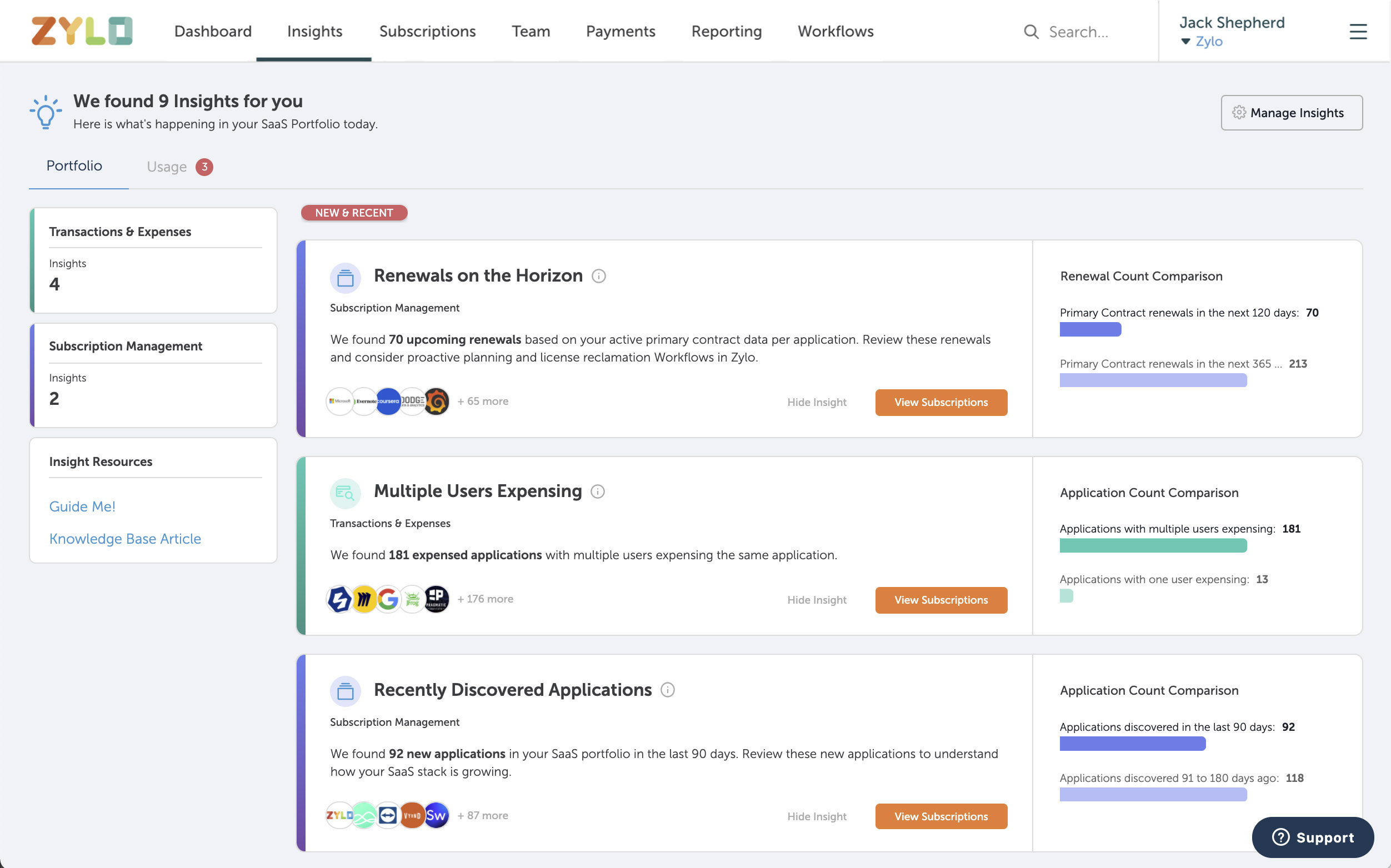
10. Zylo
Best for: Procurement teams focused on SaaS spend management
Zylo positions itself as the system of record for SaaS spend, emphasizing financial control, contract management, and procurement workflows over identity governance.
What it offers:
AI-powered SaaS discovery and categorization
License management and utilization tracking
Renewal management and contract tracking
Procurement workflow automation
Spend analytics and reporting
Where it falls short:
Spend focus, not security - Zylo optimizes costs but doesn't address misconfigurations, data exposure, or security posture
Enterprise pricing - Custom quotes based on SaaS spend under management create unpredictable costs
Procurement-centric design - IT and security teams may find the platform doesn't address their primary concerns
Discovery without action - Finding shadow IT is valuable, but remediation capabilities lag security-focused alternatives
Zylo serves procurement and finance teams managing SaaS spend but leaves security and governance gaps that require additional tools.
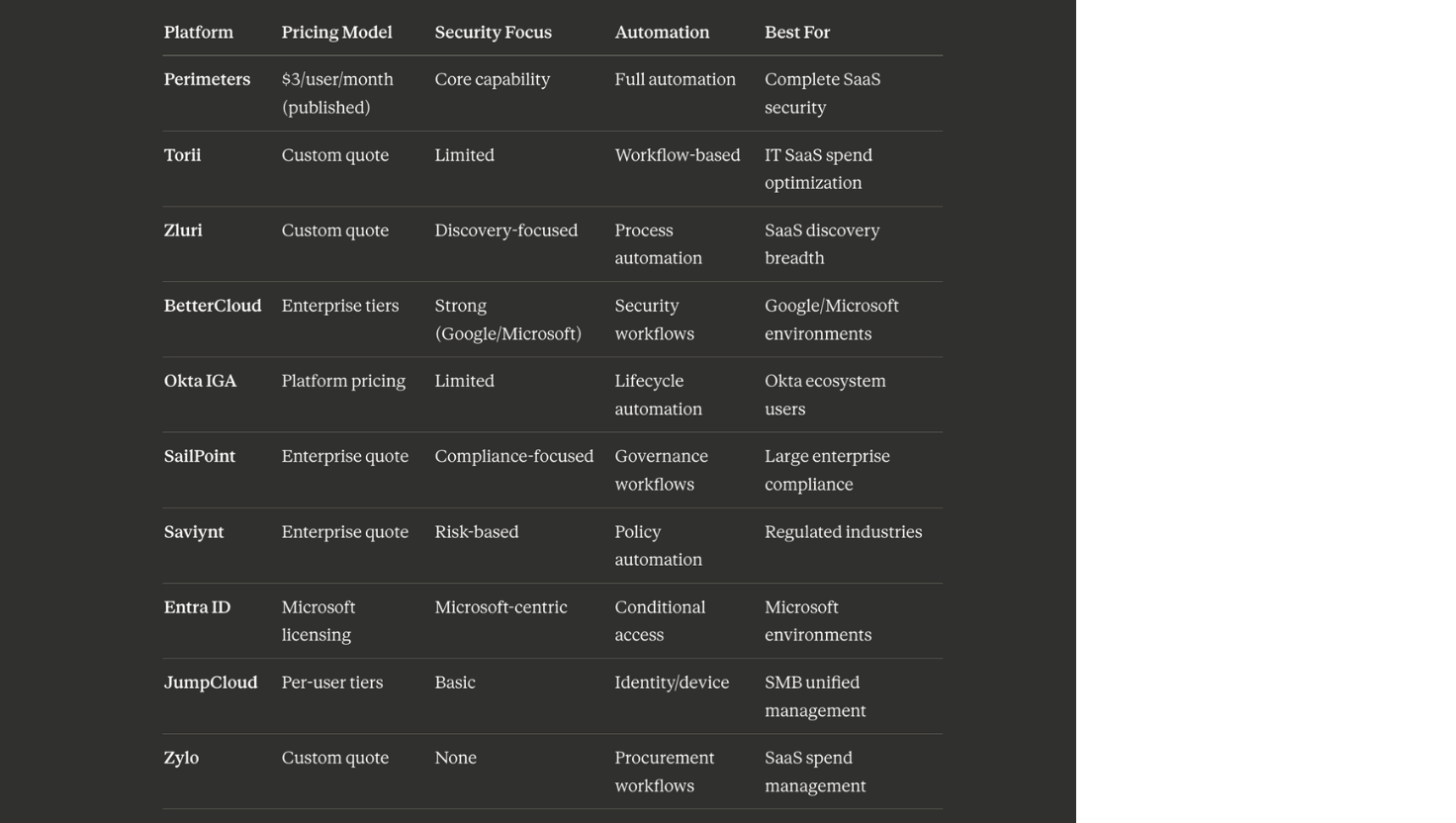
Comparison Table: Lumos Alternatives
Making the Right Choice
The identity governance and SaaS management market has fragmented into specialized niches. When evaluating Lumos alternatives:
For comprehensive, accessible SaaS security: Perimeters delivers complete visibility, automated remediation, and transparent pricing without requiring weeks of configuration or dedicated staff. Organizations that want security outcomes rather than governance processes should start here.
For SaaS spend optimization: Torii, Zluri, or Zylo provide strong discovery and cost management, though each lacks security depth.
For platform consolidation: Okta Identity Governance (for Okta shops) or Microsoft Entra ID (for Microsoft environments) extend existing investments, though at the cost of vendor lock-in.
For enterprise compliance: SailPoint or Saviynt address complex regulatory requirements but bring enterprise complexity and cost.
The reality is that most organizations don't need Lumos's custom-priced identity governance platform to secure their SaaS environment. They need a tool that delivers comprehensive visibility, fixes problems automatically, and doesn't require executive involvement just to get a price.
Take Control of Your SaaS Security Today
Ready to see what complete SaaS security looks like without enterprise complexity?